Articles / Why Nobody Shows Up to Your Webinar (And the System That Fixes It)
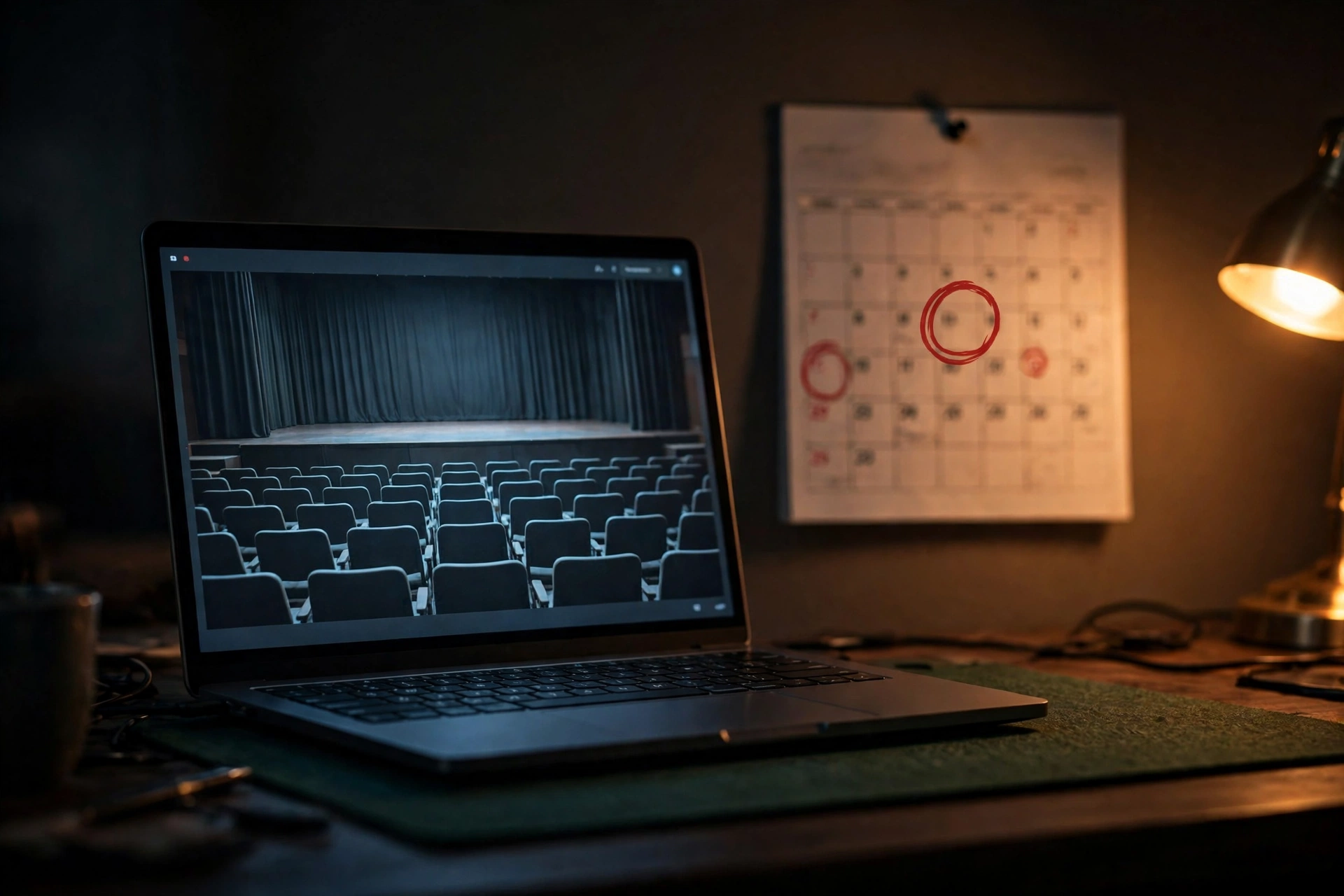
Every week, a business owner shows me the same two numbers. The first is registrations: healthy, sometimes impressive. The second is live attendance: a fraction of the first, small enough to feel personal. The conclusion they reach is that the audience was not serious, the topic missed, or webinars are dead. Almost every time, the real conclusion is duller and more useful: registration and attendance are two different events, and only one of them had a system behind it.
When someone registers for your webinar, they are making a decision about a future version of themselves — the person who will have a free hour on a Tuesday evening, in a quiet room, ready to learn. That person is sincere. But the registration is a promise made days early, against a calendar that has not happened yet. Your job is not to doubt their sincerity. Your job is to build the bridge between the promise and the hour it comes due. This article is that bridge: confirmation, reminders, the live hour itself, and the replay.
Registration is a promise, not an appointment
An appointment survives because it is anchored: it sits on a calendar, other people expect you there, and missing it has a cost. A webinar registration, by default, has none of that. It lives in an inbox, under forty newer emails, attached to a date the registrant chose in a optimistic moment. Nothing about that is a character flaw in your audience. It is the default physics of attention, and every experienced operator plans for it instead of complaining about it.
This is why the operators who fill live rooms are rarely the ones with the biggest registration lists. They are the ones who understood that the campaign does not end at the sign-up page — in most funnels, the sign-up page is roughly the halfway point. A registration page built on a platform like ClickFunnels will happily collect names all day. Collecting the people back, at the right hour, is a separate system, and it is yours to build.
The confirmation moment is where attendance is won
The sixty seconds after someone registers are the highest-leverage seconds in the whole funnel. The registrant is still on your page, still thinking about the problem your webinar solves, and still holding their phone or sitting at the keyboard where their calendar lives. Everything you need them to do, ask for it now — not in an email they may open tomorrow.
Three things belong on the confirmation page and in the first email. First, the calendar anchor: one clear button that adds the event — date, time, time zone, and join link — to their calendar in a single click. A calendar entry is the difference between your webinar competing with memory and your webinar being reminded by their own phone. Second, the expectation: what they will be able to do after the session that they cannot do now, stated plainly enough to survive being re-read on the day. Third, the instruction for the day itself: how joining works, how early the room opens, and what to have ready. Uncertainty about mechanics quietly kills attendance — people do not skip sessions they understand how to join.
Reminders are a sequence, not a shout
Most failed webinars send one reminder, an hour before showtime, into an inbox that is already closed for the day. A working reminder system is a short sequence spread across the whole gap, and each message has a different job. The confirmation email anchors the calendar. A message the day before rebuilds the reason — the problem, the cost of leaving it unsolved, one specific thing the session will show. A short note on the morning of the event makes the day feel planned around it. The final messages — an hour out, then a brief "we are live" note — exist for one purpose: to catch the willing person at the exact moment willingness can become attendance.
Channel matters as much as timing. Email carries the detail, but email is checked on the reader's schedule, and your event runs on yours. Short, direct messages — a text where the registrant has agreed to receive one — carry the time-sensitive reminders far better, precisely because they are read in minutes. Use an email platform that can run the timed sequence reliably, whether that is Kit, GetResponse, or the automation built into your funnel stack, and write every message when you build the funnel — not the afternoon of the event, when the sequence will be whatever you had time to type.
One rule governs all of it: every reminder must give the reason again, not just the time. "Your webinar starts in one hour" is information. "In one hour: the three mistakes that make good offers invisible, and the fix for each" is a decision — and decisions are what get people into rooms.
Design the live hour for the people who came
Attendance systems end at the door; good operators keep going. Start on time — the first five minutes teach your audience whether your events respect their hour, and late starts train people to register for the replay instead of the room. Deliver real value early, before any offer appears: the attendees who learn something in the first ten minutes stay for the rest, and they come back for the next event. And treat live attendance as the premium experience it is: questions answered in the room, specifics that the replay summary will not carry. People show up live when live is genuinely worth more.
None of this requires a bigger audience. It requires respecting the one that already raised its hand.
The no-shows are not a loss — they are a second list
Even a well-built system will not bring everyone. Work, family, and time zones are real. The mistake is treating the people who missed the session as a failed campaign instead of what they actually are: a self-selected list of people who wanted exactly what you teach, at a moment life interrupted. Send the replay promptly — within hours, while the intention is still warm — with a stated window, because a replay with no deadline is a replay that is never watched. Summarise the three best moments in the email itself, so opening the replay feels like continuing something rather than starting homework. Then invite them, specifically, to the next live session: people who register twice attend at rates the first list never reaches, because the second registration is made with full knowledge of what they missed.
Judge your webinar, then, by the system and not the room. Registrations measure the promise. Attendance measures the bridge. Replay views measure how well you recovered the rest. Build all three, and the empty-room problem stops being a mystery — it becomes a number you can improve, one reminder at a time.
Want this thinking applied to your brand?
Sharper positioning, clearer messaging, smarter marketing direction — start with a focused conversation.
Book a consultation